
Casinos That Accept Wire Transfers in the UK
 Available in GB
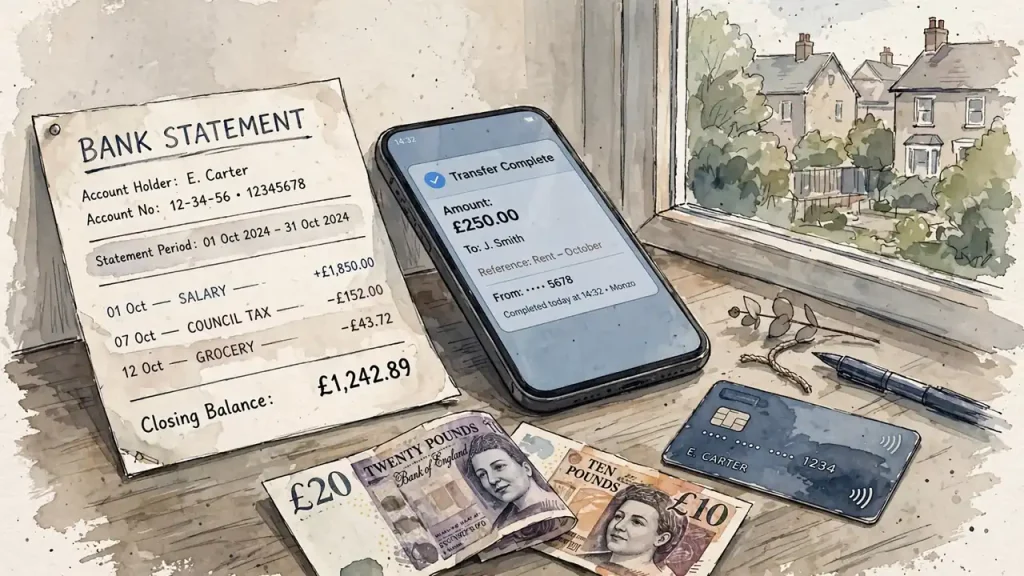
A practical guide to checking payment compatibility, deposit limits, return-to-source handling and bank-transfer withdrawal timing.
What a bank transfer can—and cannot—tell you about a casino
A bank transfer is a payment sent from your bank account to the casino’s nominated bank account, normally using the banking details shown during the deposit process. It is also described as a wire transfer, which is why searches for wire-transfer casinos and online casinos accepting bank wire transfer often refer to the same broad payment route.
The important point is that a bank transfer identifies a way to move money. It does not, by itself, tell you everything about the casino accepting it. Seeing “bank transfer” mentioned on a general payment list does not confirm that the method is available to your account, that it can be used for both deposits and withdrawals, or that the transaction will be handled in pounds.
A casino may present several payment routes under a single cashier menu. Bank transfer can appear alongside debit cards, e-wallets and other services, but those options are not interchangeable. A conventional transfer may require you to use your own banking app and enter the recipient details supplied by the casino. The transaction then passes through the banking system rather than being completed entirely inside the casino’s payment page.
UK Casinos That Accept E-Wallets: Payment Guide
That distinction matters when you compare a casino that accepts wire transfer with one offering open banking. Open banking connects the casino’s cashier with your bank through an authorised payment service. You select your bank, sign in through the relevant secure process and approve the payment. The transfer still comes from your bank account, but the route and user experience are different.
Open banking should not be treated as merely a new name for a bank wire. A standard bank transfer may involve copying or entering payment details, while open banking is designed to pass the payment instruction through a connected service. The cashier’s wording is therefore worth reading carefully. “Bank transfer”, “bank wire” and “open banking” may be displayed as separate methods, with different instructions and different availability.
There can also be a difference between how quickly money reaches the casino and how quickly a casino processes a withdrawal. A card deposit can be instant while the related payout takes several business days. The same broad principle applies here: the payment route does not determine every stage of the transaction. Casino processing, account checks and the banking route can all have a bearing on what happens after you request a payment.
Casinos That Accept Wirecard in the UK: Payment Checks
A specialist review has reported that bank transfers and open banking can support instant deposits and fast withdrawals at many sites. That is a description of what those reviewed services may offer, not a fixed feature of every casino advertising bank transfer. Treat “instant” and “fast” as claims to verify in the individual cashier and payment terms, rather than as a promise attached to the words “wire transfer”.
The cashier is the practical reference point because it shows what the casino has enabled for your account. A payment method can be listed on an information page yet be unavailable at the point where you are logged in. It may also be offered for deposits but not for withdrawals, or the reverse. The same casino can present different options according to the customer’s location, account setup or payment provider.
Currency is another detail that a bank-transfer label cannot settle. Some pages state that GBP is supported, but a specialist review should not be treated as proof that your particular account is configured for pounds. Check the account currency and the currency accepted by the payment route before making the first transaction. If they do not match, the payment may involve conversion rather than arriving in the denomination you expected.
This is especially relevant to UK players searching for casinos that accept wire transfer in 2026. A UK-facing casino may show bank transfer as an option while the cashier displays a different account currency or a separate route for sterling payments. The presence of a pound sign elsewhere on the site is not enough to establish how your payment will be handled.
A bank transfer identifies a way to move money, but it does not guarantee the method is available for all account types or that it supports both deposits and withdrawals in GBP.
A bank-transfer option can tell you that the casino has made that route available in some form. It cannot prove that the route is currently enabled for you, that it supports both directions of payment, or that GBP is the account currency. Open banking may provide a similar source of funds with a different connection to your bank, and a specialist review has associated both methods with instant deposits and fast withdrawals at many sites. Before treating either as suitable, read the exact method shown in the logged-in cashier and confirm the currency displayed there.
How to compare transfer costs without assuming one is cheapest
A bank wire transfer can look inexpensive when the casino shows no payment charge. That does not necessarily make it the lowest-cost way to fund an account. The amount leaving your bank account, the amount credited by the casino and the amount ultimately available in your gambling balance can be affected by several separate charges.
A specialist review identifies five possible parts of the cost:
- a charge from the casino;
- a fee from the payment provider;
- a charge from your bank or card issuer;
- a difference between the exchange rate used and the rate you expected;
- a network fee connected with moving the payment.
Not every transfer includes every charge. The point is to avoid treating a single “fee-free” label as a complete price. A casino may waive its own charge while another company involved in the transaction applies a fee. Equally, a payment provider may advertise a low headline cost while the exchange rate creates a less visible deduction.
Start with the casino’s charge
The first item to check is whether the casino adds a payment fee to a bank transfer. This is the most visible part of the calculation and is often the only one shown prominently in a cashier or payment information page.
A zero casino charge is useful information, but it answers only one question: what the casino itself takes for processing the payment. It does not confirm that your bank, payment provider or the network used for the transfer will do the same.
Look for the wording that applies to the particular transaction rather than relying on a general statement about “free banking”. The relevant cost may differ according to the currency, route or provider involved. A bank wire transfer online casino page can therefore be helpful for identifying the stated casino charge, but it is not a complete price comparison by itself.
Bitcoin casinos in the UK: what payment info proves
Separate provider and bank charges
Payment providers can add their own fees, even where the receiving casino does not. Your bank may also charge for sending money, receiving it, or handling a transfer that involves currency conversion. The account’s tariff and the payment route matter here.
This is why two players can use the same online casino with bank wire transfer and face different total costs. Their banks may apply different charges, or one player may send funds in the casino’s account currency while another sends funds in a different currency. The casino’s payment page cannot necessarily show every cost imposed outside its own system.
Before sending money, identify which organisations stand between your bank account and the casino balance. Then check the relevant fee information for the amount and currency you intend to use. If a charge is described as a percentage, a fixed fee or a combination of both, include it in the comparison rather than looking only at the casino’s wording.
Potential transaction costs
Beyond the casino’s own charge, you should consider:
- Fees from the payment provider
- Charges from your bank or card issuer
- Exchange rate spreads during currency conversion
- Network fees from intermediary institutions
Treat currency conversion as a real cost
Currency conversion can alter the value of a payment without appearing as a separate line called “fee”. The exchange rate used by a bank or provider may include a spread: a difference between the underlying rate and the rate offered to the customer.
A specialist review notes that this spread can cost more than a visible flat charge. That makes the exchange rate important even when a wire transfer casino advertises no payment fee. A method with a stated charge may still be cheaper overall if it uses a more favourable rate for the transaction.
Compare like with like. Consider the currency leaving your bank account, the currency accepted by the casino and the rate applied at each stage. If the casino account is denominated in pounds but the transfer is converted elsewhere, the relevant cost may arise before the funds reach the gambling balance. The reverse can also be true: a payment appearing to arrive without a casino charge may still have lost value during conversion.
Do not overlook network costs
Some transfers pass through a payment network or intermediary institutions. Network fees can form part of the total cost, alongside the casino’s own charge and the fees applied by the provider or bank.
Casinos That Accept Tether in the UK: What to Check
The practical difficulty is that a network cost may not be obvious when you begin the transaction. It may be included in the amount deducted, reflected in the amount received, or disclosed in the terms of the bank or provider. For that reason, compare the amount sent with the amount credited, not just the label attached to the payment method.
This applies when comparing a bank transfer online casino UK option with another route. A different method may have a clearer fee but not necessarily a lower total cost; a bank transfer may have no casino charge but still involve external deductions.
Compare the complete transaction
There is no payment method that is the lowest-fee choice for every player and every transaction. That conclusion, reported in a specialist review, follows from the way charges vary between casinos, providers, banks, currencies and payment amounts.
Use a simple checklist:
- Record the amount you plan to send.
- Note any fee stated by the casino.
- Check the provider’s charge for that route.
- Check your bank’s relevant fee.
- Identify whether conversion will occur.
- Compare the exchange rate or spread where it is disclosed.
- Allow for any network or intermediary cost.
- Compare the amount expected to arrive with the total amount leaving your account.
The same approach applies when assessing an online casino bank transfer withdrawal, although the relevant charge may be disclosed in a different part of the payment terms. A “best wire transfer online casino” claim has little value unless it explains which costs were included and for what currency and transaction amount.
The sensible comparison is therefore not “Which method says free?” It is “What will this specific payment cost from bank account to casino balance, after every stated charge and conversion effect?” That calculation gives you a more reliable basis for choosing among UKGC-licensed bank transfer casinos than a headline fee alone.
Check payment compatibility in the cashier before you deposit
A payment method shown on a general casino page is not necessarily available for your particular account. The cashier is the practical check. Sign in, open the deposit section and look at the methods presented there, rather than relying on a comparison table, an old review or a logo displayed elsewhere on the site.
Cashier verification
- Confirm the bank-transfer route is listed in the live cashier
- Check if the route is available for both deposits and withdrawals
- Verify the account currency matches your expectations
- Ensure the requested payment details match your personal account
This matters when you are looking for an online casino that accepts wire transfer payments. “Bank transfer” or “wire transfer” may appear in a broad list of supported options, while the live cashier presents a different selection. The available route can depend on the casino’s current payment setup, your account, and the details you have entered. A method that appears in an article about a casino is not proof that you can use it at the point when you want to fund your account.
Check the route in both directions
If you expect to use a bank transfer for deposits and later request a wire-transfer withdrawal, check both functions. A payment option may be displayed under deposits without being offered as a withdrawal destination. That distinction is easy to miss when you are comparing casinos from a general list of payment brands.
Look for a clear withdrawal entry for the same route, not merely a reference to bank payments in the casino’s help pages. If the cashier does not show the method for your account, do not assume that customer support can add it later. Ask before sending money if the route is important to you, and keep the answer with the casino’s payment terms.
The same check applies to other methods. Paysafecard is a deposit-only product, so it should not be treated as a way to receive winnings. Skrill and Neteller appear at some sites, but availability can differ between operators and accounts. Some UK casinos also offer Apple Pay for deposits, although that does not establish that the option is available at every casino or for every Apple Pay-linked card.
Card logos
Attention The presence of Visa or Mastercard logos on a site does not guarantee your specific card is eligible for use; always confirm availability in the cashier.
Treat card logos as a prompt, not confirmation
Visa and Mastercard are widely recognisable payment brands, but the presence of their logos on a casino page does not settle whether your particular card product can be used. A specialist review may list Visa and Mastercard among the casino’s payment methods; current UK availability and card-product eligibility still need to be checked in the cashier.
This is especially important because not every card carrying a familiar brand has the same function. The cashier should identify the route available to you, while the casino’s payment terms should explain any product restrictions. Do not send a transfer or attempt a card deposit until the option is visible for your account and its purpose is clear.
Check the account before committing funds
Before making a deposit, confirm that:
- the cashier lists the intended bank-transfer route;
- the route is shown for deposits, not only mentioned in general payment information;
- a corresponding withdrawal option is available if you want to use it for payouts;
- the payment details requested by the casino match the account you intend to use;
- the account currency shown by the casino is suitable for the transaction.
That final screen is more useful than a static payment-method list because it reflects the casino’s current arrangement with its payment providers. It also prevents a common misunderstanding: finding a casino described as accepting wire transfers is not the same as confirming that your account can use that route for both funding and withdrawal.
If the cashier offers no suitable option, pause before depositing. Contact the casino through its stated support channel and request confirmation of the exact payment route and its availability for your account. Do not rely on an old page, a promotional badge or a payment logo when the live cashier says something different.
Deposit minimums and limits to check before sending money
A casino wire-transfer deposit is not governed by one universal minimum. The starting amount can depend on the payment method selected in the cashier, so the figure shown for a bank transfer may differ from the one shown for a card or e-wallet. A specialist review places the typical starting deposit at £10–£20, depending on the method. Treat that as an indication rather than a standing rule for every casino or every account.
The relevant figure is the minimum displayed for your own account. Payment pages can apply separate thresholds to different routes, and a bank-transfer option may have its own conditions. Before instructing your bank, open the casino cashier, select the transfer method and check the amount the operator accepts. That avoids sending less than the permitted minimum and discovering that the transaction cannot be credited as intended.
The minimum is not the whole limit
Casinos can also impose maximum deposit limits. These may apply:
- to a single transaction;
- across a day; or
- across a month.
The applicable maximum can vary with the payment method and the status of the account. A limit attached to a newly opened account may not be the same as one shown after the account has passed further checks or acquired a different status. A specialist review reports this method-and-account variation, but the cashier remains the practical place to confirm the amount currently available to you.
Do not assume that a limit described on a general payment page applies to a wire transfer. A casino may present several deposit routes together while assigning each a different minimum or maximum. The bank-transfer option needs to be read on its own, including any separate instructions shown before confirmation.
Check the amount before sending
A bank transfer is harder to correct casually than a rejected card attempt: once you have instructed your bank, the money is already moving through the banking system. That makes the displayed deposit range worth checking before you authorise the payment. Confirm the minimum, the maximum for the intended transaction and any wider daily or monthly ceiling.
It is also sensible to check whether the amount you want to send falls within the casino’s current permitted range rather than relying on a figure remembered from an earlier visit. Limits can change with the selected method or the account’s status. The cashier’s current information is therefore more useful than a generic statement that a casino accepts wire transfers.
If your intended deposit exceeds the permitted amount, do not split it automatically into several transfers. First check the casino’s instructions and the limits shown for the method. Multiple payments may still be subject to a daily or monthly ceiling, so dividing the sum does not necessarily make it acceptable. The same check applies when sending a smaller amount: the transfer must meet the method’s minimum as well as staying below its applicable maximum.
Check limits
Always verify the specific minimum and maximum deposit amounts displayed in your account cashier before sending funds.
Keep your deposit and withdrawal details consistent
When you fund an online casino account by bank wire transfer, the payment details should match the personal information held by the casino. The account name, registered customer details and payment route should all point to the same person. This simple alignment can reduce avoidable friction when the casino checks who owns the funds.
A casino that accepts wire transfer deposits may still review the connection between your gambling account and the bank account used to fund it. That review is not necessarily a sign that anything is wrong. It is a way of confirming that money is moving between accounts belonging to the same customer, rather than passing through an unrelated person or business.
The cleanest arrangement is often one named bank account used consistently for both depositing and receiving funds. If the casino account is in your name and the transfer comes from a bank account in that same name, the basic ownership information is easier to reconcile. The same principle applies when you use another payment route: keep the route and account details linked to you rather than borrowing someone else’s payment account.
Details worth keeping aligned
Before sending a transfer to a casino that accepts bank wire transfer payments, check that:
- the name on your casino account matches the name attached to the bank account;
- the personal details held by the casino are current;
- the transfer is made from your own account, not from a relative’s, friend’s or colleague’s account;
- you use the casino’s required payment reference accurately, so the payment can be associated with your account;
- you keep confirmation of the transfer and the account details used.
A mismatch can create questions even where the money is legitimate. For instance, a transfer from a differently named account may leave the casino needing more evidence before treating it as your payment. Changing between several people’s accounts or routes can make the ownership trail harder to follow. It is an unnecessary complication when one personal account is available.
Consistency also means avoiding casual substitutions. If you normally use one account and then send money from a joint account, a business account or an account held by another person, the casino may need to establish how you are connected to it. The relevant issue is not which option sounds most convenient, but whether the payment details clearly belong to the customer who holds the gambling account.
Keep your records as well. Save the transfer confirmation, the date and the account used, particularly when the payment is made by bank wire. These records can help you identify a payment later if the casino asks you to confirm its origin. They also reduce the risk of confusing one transfer with another when you have more than one financial account.
Using matching details does not remove every possible account check. It does, however, avoid a basic source of uncertainty. For a casino that accepts wire transfer deposits, one named account used consistently is often the most straightforward way to keep the payment trail clear from the beginning.
Do
- Use a single, personally named bank account consistently
- Match your casino account name to your bank account name
- Keep records of all transfer confirmations and dates
Don’t
- Use a relative’s, friend’s, or colleague’s account
- Use a business or joint account if it doesn’t match your registration
- Rely on casual substitutions of payment methods
How casino winnings are returned to you
When you request a payout, the casino does not treat the destination as an entirely separate choice from the way you funded the account. UK anti-money-laundering controls commonly require winnings to be sent back through the original payment source. If you deposited by bank or wire transfer, that can mean returning the approved withdrawal to the bank account used for the deposit, rather than sending it to an unrelated account.
This is often described as a closed-loop approach: money should follow a traceable route back to the customer who supplied it. The practical result is that a wire-transfer casino may ask you to select the same banking route for the withdrawal, subject to the casino’s own cashier rules and account checks. A transfer account in your name provides the clearest connection between the deposit and the requested payout.
The original source does not necessarily mean the casino will send the money immediately. A withdrawal request normally enters the casino’s internal review process first. The operator may check the request, confirm that the account satisfies its requirements and approve the payment before the bank receives the transfer instruction. Until that approval has taken place, the funds may remain shown as pending in your casino account.
A specialist review notes that processing can take longer for a first withdrawal while verification is completed. Treat that as a point to check against the individual operator’s terms rather than as a universal timetable. The casino’s approval stage is part of the payout process, so the time displayed for a bank transfer may not cover the period between submitting the request and the operator authorising it.
Casinos That Accept Interac in the UK: Payment Checks
For this reason, read the withdrawal instructions before assuming that any bank account can receive casino winnings. Look for the required account holder details, the accepted payment route and any documents requested during the review. These details matter particularly when you have funded the account by wire transfer and expect the winnings to return by wire.
A payout can therefore involve two distinct stages: the casino authorises the withdrawal, and the approved payment is then sent through the relevant banking channel. The first stage is controlled by the operator; the second follows the payment route selected and accepted for your account. Keeping that distinction in mind makes a pending withdrawal easier to interpret and avoids treating a casino approval delay as a bank-transfer failure.
Bank-transfer withdrawal timing: cut-offs, weekends and verification
A casino wire transfer withdrawal does not move at one fixed speed. Several stages can affect when the money reaches your bank account: the casino’s approval process, the point at which the request is submitted, bank processing schedules and any currency conversion.
A specialist review identifies cut-off times, weekends and currency conversion as factors that can affect bank-transfer delivery. A withdrawal requested after a payment provider or bank’s daily processing cut-off may not enter the relevant processing cycle until later. Weekend handling can have a similar effect, because banking services and internal payment teams may not process every stage on non-business days. The calendar therefore matters even when the casino has accepted the request.
Currency can add another stage. If the casino account and receiving bank account use different currencies, the transfer may require conversion before the funds are credited. That can affect both the route taken and the time needed for the payment to appear. Confirming the account currency before requesting a withdrawal makes the timing easier to interpret and avoids treating a conversion step as a casino delay.
Withdrawal factors
Total withdrawal time is affected by casino approval processes, KYC verification, bank processing schedules, and potential currency conversion steps.
Casino approval comes before the bank-transfer stage. The remote gambling licensee may need to review the withdrawal and confirm that the account is ready for payment. A specialist review also notes that withdrawal speed depends on this internal approval and on whether the player’s account is fully verified. If KYC checks remain outstanding, the request may wait while the casino asks for or examines the required information.
This is particularly relevant to a first withdrawal. The casino may complete additional checks before releasing funds, so the time shown for a bank transfer should not be read as covering the whole process from clicking “withdraw” to seeing the balance in your bank account. It may describe only the transfer after approval.
When comparing a wire transfer casino withdrawal, check which stage the stated processing information refers to. Look for details on casino approval, verification, cut-off handling, weekend processing and currency conversion. If those points are not explained, treat any broad speed claim cautiously: a fast bank route cannot shorten an unresolved KYC review or a request submitted outside the relevant processing window.
How returning funds to their source helps prevent fraud
When a casino sends money back through the payment route used for the deposit, it creates a clearer link between the person who funded the account and the person receiving the funds. That link is useful as a basic protection against fraud and money laundering (AML). It makes the movement of money easier to trace and reduces the scope for an account to be used as a route between unrelated parties.
Casinos That Accept Entropay in the UK: What to Check
This is why a wire-transfer casino may expect a withdrawal to return to the bank account associated with the original payment. The same principle applies when another payment method was used: the casino may first look to the original source rather than allowing winnings to be redirected wherever the customer chooses. It is a control on the flow of funds, not a statement that a wire transfer is inherently safer than every other payment option.
The arrangement also helps identify inconsistencies. A mismatch between the gambling account, the funding source and the proposed recipient can make it harder for the casino to establish who owns the money. That does not automatically mean that fraud has occurred, but it can prevent the transaction from being treated as routine.
There are situations in which returning money to the first source is not possible or another route is requested. An alternative payment destination may then require additional verification before the casino releases the funds. The operator could need more evidence that the account holder owns or controls the receiving account, or that the proposed route is connected to the same customer. The extra checks are part of the security process rather than an indication that the replacement method will be accepted.
For a wire transfer payment casino account, keeping the payment trail straightforward is therefore sensible. Use details that identify the same customer throughout the transaction and read the cashier’s instructions before requesting a different destination. If the casino cannot connect the proposed recipient with the original source, processing may stop while the account and payment ownership are checked. That inconvenience is the practical cost of a control designed to make unauthorised transfers and concealed money movements more difficult.
Fraud prevention
Casinos use closed-loop payment systems to ensure money returns to the original source, which is a critical control against money laundering.
UKGC rules that affect casino payments
UK Gambling Commission (UKGC) safeguards apply to remote gambling operators serving customers in Great Britain, including casinos that offer bank transfer deposits. The payment method does not remove the operator’s obligations: a bank transfer is still a gambling deposit, so the account must be subject to the same payment protections as any other permitted route.
Before you make your first deposit, the operator must prompt you to set a financial limit. This is an account-level control rather than a condition attached only to one payment method. The casino must also make those controls accessible after registration, so you can review or manage the limit from your account rather than having to rely on a separate request to customer support.
That matters when comparing a bank wire transfer casino with another payment option. A transfer may look like a straightforward way to fund an account, but the presence of a cashier option does not bypass the initial limit-setting prompt. Treat the prompt as part of the payment process, not as an optional marketing feature.
The other central rule concerns credit-card payments for gambling. The regulator prohibited this form of funding on 14 April 2020, and the restriction remains in force. UK-licensed casinos therefore cannot accept credit cards for gambling deposits. A debit card may be listed separately, but the type of card and the product’s eligibility still need to be clear before you use it.
The restriction also covers indirect arrangements. Remote operators cannot accept credit-card funding routed through a money service business, and they cannot accept wallet payments where the wallet permits credit-card funds to be used for gambling. Choosing a bank transfer does not make credit-card funding acceptable if the money has first been channelled through a prohibited route.
Casinos That Accept WebMoney in the UK: What to Know
For a UKGC casino bank transfer, the practical checks are therefore simple but important: set the required financial limit before depositing, confirm that the account provides accessible limit controls, and use a funding source that is not based on credit-card gambling. These safeguards concern how the account is funded and controlled; they do not turn a bank transfer into a guarantee about cost, availability or processing speed.
How to judge whether a wire-transfer casino suits you
A suitable wire-transfer casino is not necessarily the one advertising the lowest fee. The sensible choice depends on the payment route, the amount you intend to move and the currency in which your account is held.
Start with the cashier’s stated charges. Then consider costs outside the casino: the payment provider may apply its own fee, while your bank or the transfer network may add another. If the transaction involves currency conversion, compare the exchange rate with the rate you would expect to receive. A conversion spread can exceed a clearly displayed flat charge, so a “free” transfer is not automatically the cheapest option.
Casinos That Accept Giropay in the UK: How to Check
A specialist review makes the same practical point: there is no single payment method that costs least for every customer and every transaction. The relevant comparison is the total cost for your particular amount and currency. A route that looks economical for a small sterling payment may be less attractive when conversion or network charges apply.
Before sending funds, check that the casino account displays the transfer route you plan to use and confirms the supported account currency. Keep the final payment details, including any charge information, for your records. The most useful comparison is therefore not a headline claim about the best wire-transfer casino in the UK, but a short calculation based on the transaction you are actually planning.
If the total cost is clear, the currency matches your account and the cashier presents the route you need, the casino may suit your purpose. If charges or conversion terms remain unclear, treat that uncertainty as a cost in itself and compare another option before depositing.
Do UK casino withdrawals require verification?
Yes, casinos may complete verification before approving a withdrawal, especially the first one. UK anti-money laundering rules also generally require payouts to go back to the original payment source.
Is Skrill available?
Yes, Skrill is available at some UK-friendly casino sites and is a common deposit method. It may be excluded from promotions.
Which method has the lowest fees?
There is no universally cheapest method. Compare the casino and provider charges, bank fees, exchange-rate spread and any network costs for the payment amount you plan to use.
What is the fastest withdrawal method for UK casinos?
PayPal, open banking services and debit cards linked to fast payout systems are generally among the quickest. The casino’s approval process and whether your account is verified also affect how quickly you receive the money.
What is the current minimum deposit?
The minimum deposit usually starts at £10–£20, depending on the payment method.
Are fast casino withdrawals guaranteed?
No. Withdrawal speed depends on the casino’s approval process, account verification and the payment route; bank transfers can also be affected by cut-off times, weekends and currency conversion.
Top online casinos in the UK
- EvoSpinBonus: 125% up to €2500 + 125 Free Spins · Payout speed: 1-3 business days
- NightLuckBonus: Welcome Pack + 805% Up To 6400€ + 280 FS · Payout speed: 1-3 business days
- SlotoSportBonus: 500% up to £ 10 200+ 777 FS · Payout speed: 1-3 business days
- Revery PlayBonus: 100% up to€1,000+ 100 FS · Payout speed: 1-3 business days
- ZombillionBonus: Welcome Pack 250% up to £4000 + 200 FS · Payout speed: 1-3 business days
- x3betBonus: Welcome Pack 100% Up to £1.000 + 200 Free Spins · Payout speed: 1-3 business days
- DieselwinBonus: Welcome Pack 250% up to £4000 + 200 FS · Payout speed: 1-3 business days
- BeOnBetBonus: 100% up to €500 + 100 FS · Payout speed: 1-3 business days
- JetsetspinsBonus: 200% Bonus + 100 Free Spins + Free Royal Wheel · Payout speed: 1-3 business days
- SpinFormulaBonus: 550% Up To £15,000 + 550 FS · Payout speed: 1-3 business days